


Re-Tray is a purpose designed waste separation system that moves sorting upstream to the tray, using simple physical design to deliver permanent reductions in food court waste costs while generating strong, scalable returns.
The World’s First Tray-Based Waste Separation System
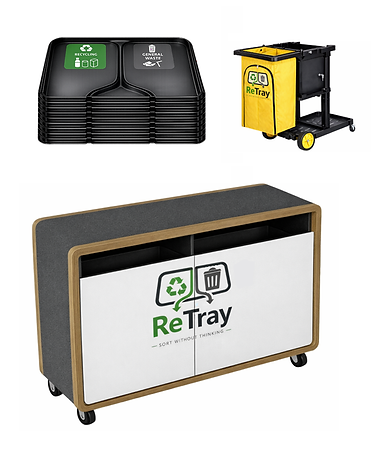
ReTray is the world’s first system to move waste separation from the bin to the tray itself. Using simple physical design and tray-level cues, it enables customers to sort waste naturally as they eat, without training or behavioural programs. When returned, the tray mechanically directs waste into aligned bins, cutting contamination, improving food court cleanliness, and delivering recurring six‑figure annual waste cost savings per centre.
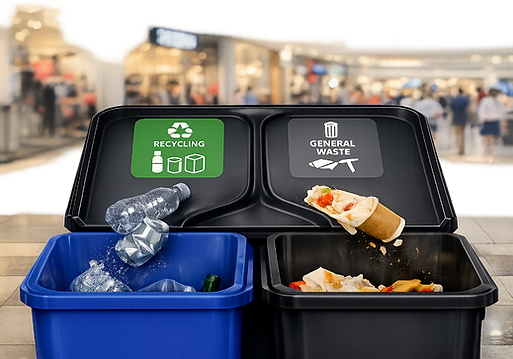


Clear financial and compliance upside
Cuts food court waste costs, improves recycling quality, and supports upcoming mandatory food waste separation, delivering recurring six‑figure savings per centre.
Delivers permanent contamination reduction
Customers separate waste naturally as they eat, with gravity and tray geometry directing disposal, consistently reducing contamination without training, enforcement, or extra labour.
World First
The first and only waste system to embed waste separation into the food tray itself, shifting sorting upstream through physical design rather than bins, signage, or behaviour change.


Why Introduce
Re-Tray?
To reduce food court waste contamination and improve recycling by embedding waste separation into everyday behaviour, using simple physical design to deliver cleaner recycling, lower costs, and compliant, scalable waste outcomes without relying on training, signage, or enforcement.

From 1 July 2026, the NSW Environment Protection Authority will require businesses that sell or handle food, including shopping centres and food courts, to separate food waste from general waste under new state legislation. The mandate is being rolled out in stages, starting with larger sites that generate high volumes of waste, and expanding through to most commercial food operations by 2030. The EPA has made it clear that separation at source is a compliance requirement, with rejected loads and higher landfill charges applying where contamination persists. For shopping centres, the challenge is achieving clean separation in busy food courts where traditional bin‑based systems rely on distracted customers and frequently fail to meet the required standard.
.png)